China’s carton industry is large, capable, and difficult to judge from catalog photos alone. This guide introduces ten leading Chinese manufacturers for Carton Box Packaging, with attention to production experience, material control, printing quality, and delivery reliability.
The shortlist considers manufacturers such as Nine Dragons Paper, Lee & Man Paper Manufacturing, Shanying International, Sun Paper, Zhejiang Jingxing Paper, Xiamen Hexing Packaging Printing, Shenzhen YUTO Packaging Technology, and other established suppliers. Their capabilities may differ widely. Some focus on high-volume corrugated cases. Others provide retail packaging, color printing, structural design, or export-oriented services.
Real details matter. We examine flute options, edge crush strength, board moisture, print registration, die-cut accuracy, and pallet stability. Factory certifications also deserve review, including ISO 9001 and FSC certification where applicable. A strong supplier should explain its testing process clearly. It should also provide samples before mass production.
Packaging consultant Lisa McTigue Pierce describes packaging as “the product’s first moment of truth.” That observation remains practical. A carton meets the customer before the product does.
Still, no ranking is perfect. Public data can be incomplete, and factory performance may change with demand, equipment, or management. A supplier that performs well for electronics may not suit fresh food or heavy machinery. Buyers should verify specifications, inspect samples, and confirm production capacity directly.
This comparison is designed as a practical starting point, not a final verdict. The best Carton Box Packaging partner is the one that matches your product, market, budget, and quality expectations.
A leading carton box packaging manufacturer in China is defined by more than machinery and low pricing. It turns packaging requirements into stable, measurable results. Experienced teams check product weight, stacking pressure, moisture exposure, and shipping routes before recommending board grades. A sample should fit tightly, close smoothly, and survive repeated handling. Small details matter. Clean creases prevent tearing around folds. Reliable manufacturers also maintain material checks, calibrated testing equipment, and batch records. These practices support consistent Custom Carton Box Packaging for food, electronics, retail, and industrial products.
Professional capability appears in communication. Engineers should explain flute structures, edge crush strength, printing limits, and tooling costs clearly. They should provide prototypes, inspection standards, and realistic lead times. Factory visits can reveal practical evidence, including organized paper storage, controlled humidity, marked production areas, and dimensional checks. Certifications may help, but documents alone prove little. Ask how defects are isolated and corrected. One honest weakness is valuable. A supplier that records a failed test and improves the process may be more dependable than one claiming perfection.
Tips: Request a pre-production sample. Confirm board thickness and compression targets in writing. Review artwork at full size, especially small text and barcode contrast. Ask for a documented quality plan and shipment photos. Compare total cost, not only unit price. A cheaper box can collapse, waste materials, or delay delivery. Keep one approved sample for future checks.
Ranking China’s leading carton box suppliers requires more than comparing prices. Manufacturing experience matters, especially for suppliers serving food, electronics, furniture, and export packaging sectors. A reliable factory should explain its board grades, flute profiles, paper weights, and compression targets clearly.
Quality evidence should guide the ranking. Look for documented incoming-material checks, moisture testing, edge crush testing, and print-color controls. Ask for production samples, not only catalog photographs. A serious supplier can provide batch records, inspection reports, and traceable corrective actions. Small details matter, such as clean creasing, accurate die-cutting, and consistent folding on a 500-box sample.
Capacity and delivery performance also deserve close attention. Review equipment, shift planning, monthly output, minimum order quantities, and average lead times. Confirm whether the supplier can manage sudden volume changes without reducing board strength. Communication is another practical measure. Clear quotations should separate tooling, printing, packing, and transport costs. Vague pricing creates avoidable disputes.
Certifications can support credibility, but they should not replace factory verification. Check certificate scope, expiration dates, and testing laboratories. Sustainability claims need evidence, too. Recycled content, ink type, and waste handling should be documented. Rankings remain imperfect. A large factory may not offer the best small-batch service, while a smaller supplier may lack backup capacity. Independent audits and repeat sampling reveal more than polished presentations. Sometimes, the cheapest quote is simply incomplete.
China’s top ten carton box packaging manufacturers represent different strengths rather than one identical standard. One profile focuses on export cartons with reinforced corners. Another specializes in retail boxes with sharp folding lines and accurate color control. A third serves food packaging projects with traceable paper sourcing. Two manufacturers emphasize high-speed flexographic printing for large orders. Another produces small batches for growing online sellers. One profile highlights moisture-resistant corrugated boards for humid warehouses. The remaining manufacturers offer custom inserts, heavy-duty shipping cartons, or automated packing support. Together, these profiles show how High-Quality Carton Box Packaging depends on materials, testing, equipment, and practical communication.
Tips: Request compression-test data, paper grades, flute details, and sample cartons before approving production. Check whether the supplier can explain edge-crush testing in clear terms. Ask for production photos, inspection records, and realistic delivery estimates. A reliable manufacturer should discuss weaknesses, not only display polished samples. No factory is perfect. Some performance data may remain self-reported, so independent verification still matters.
Experienced buyers should compare more than quoted prices. Inspect how neatly corners meet, whether printed colors stay consistent, and how boxes perform after stacking. Ask about recycled content, ink safety, and waste handling. Confirm tolerances for length, width, and board thickness in writing. The strongest profiles usually show stable quality control, responsive engineers, and documented export experience. Still, a lower-cost option may win for simple cartons, while complex designs need stronger technical support.
Comparative overview based on commonly documented capabilities of established Chinese carton packaging manufacturers
| Profile | Primary Packaging Focus | Main Board Types | Printing & Finishing | Typical Order Capability | Quality & Compliance Practices | Common Export Markets | Best Suited For |
|---|---|---|---|---|---|---|---|
| 01 | E-commerce shipping cartons and Mailer Boxes | Single-wall and double-wall corrugated board | Flexographic printing, die-cutting, tape or adhesive closure | Prototype quantities through recurring bulk orders | Incoming paper inspection, compression testing and batch traceability | North America, Europe, Australia and Southeast Asia | Online retailers, subscription businesses and fulfillment operations |
| 02 | Retail display cartons and shelf-ready packaging | White-top kraft, coated liner and recycled corrugated board | Flexographic and offset-laminated printing, varnish and die-cutting | Medium to high-volume production runs | Color approval, dimensional inspection and finished-carton testing | Europe, the United States, Canada and the Middle East | Consumer goods, food, household products and promotional campaigns |
| 03 | Heavy-duty industrial shipping boxes | Double-wall and triple-wall corrugated board | One- to four-color flexographic printing and reinforced construction | Large-format and repeat industrial orders | Edge-crush, bursting-strength and box-compression testing | Asia-Pacific, Europe and North America | Machinery, automotive components, appliances and export shipping |
| 04 | Luxury folding cartons and premium presentation boxes | SBS, FBB, coated paperboard and specialty textured stocks | Offset printing, foil stamping, embossing, debossing and spot UV | Small premium batches to large retail programs | Color management, artwork proofing and cosmetic inspection | Europe, North America, Japan, South Korea and the Gulf region | Cosmetics, gifts, electronics accessories and premium consumer products |
| 05 | Food and beverage corrugated packaging | Food-contact paperboard, kraft liner and moisture-resistant grades | Water-based flexographic inks and high-speed rotary die-cutting | Stable high-volume supply for standardized box formats | Hygiene controls, ink documentation and moisture-resistance checks | Southeast Asia, Europe, North America and domestic China | Produce, beverages, packaged foods and food-processing suppliers |
| 06 | Pharmaceutical and healthcare secondary packaging | Folding-box board, coated paperboard and tamper-evident materials | High-resolution offset printing, numbering and specialty finishing | Controlled medium-volume and repeat production | Documented quality systems, artwork control and inspection records | Asia-Pacific, Europe, Africa and the Middle East | Over-the-counter products, medical devices and healthcare supplies |
| 07 | Sustainable and recyclable paper packaging | Recycled kraft, uncoated board and recyclable barrier paper | Water-based inks, low-plastic coatings and minimal finishing | Custom development through recurring commercial orders | Paper-source documentation, recyclability review and material testing | Europe, Australia, North America and environmentally focused markets | Sustainable brands, food service, personal care and retail packaging |
| 08 | Custom die-cut inserts and protective carton systems | Corrugated board, honeycomb paperboard and molded-paper-compatible structures | Structural design, precision die-cutting and flexographic marking | Engineering samples, pilot runs and scalable production | Transit simulation, fit testing and dimensional verification | North America, Europe, Japan and Southeast Asia | Fragile goods, electronics, instruments and replacement parts |
| 09 | Fast-moving consumer goods and standard shipping cartons | Recycled corrugated board, kraft liner and single-wall board | High-speed flexographic printing and automated folder-gluing | High-volume standardized specifications | Process control, carton-count verification and pallet inspection | Domestic China, Southeast Asia, Africa and the Middle East | Distributors, wholesalers, general merchandise and logistics companies |
| 10 | Export-oriented customized packaging programs | Kraft, white-top, coated and specialty corrugated grades | Multi-color printing, offset lamination, die-cutting and structural prototyping | Low-volume custom development to long-term contract supply | Pre-production approval, production sampling and export documentation | Worldwide, including Europe, North America and Oceania | International importers, private-label suppliers and contract manufacturers |
Note: Capabilities, certifications, minimum order quantities and export coverage can vary by production site and may change over time. Buyers should verify current specifications, certifications and test reports directly before placing an order.
China’s top ten carton box manufacturers differ less in basic production and more in customization depth. A serious comparison should examine corrugated grades, flute profiles, paper thickness, printing accuracy, and structural design support. Standard single-wall cartons suit lightweight goods. Heavy products often require double-wall boards and reinforced corners.
Customization begins with the dieline. Experienced packaging teams can adjust internal partitions, handles, windows, and locking tabs for a precise fit. Some factories offer offset, flexographic, and digital printing. Digital printing works well for short runs or changing artwork. Flexographic printing may reduce unit costs for larger orders. Ask about color proofs, compression testing, moisture resistance, and drop testing before approval.
Production details also reveal reliability. Compare minimum order quantities, sampling fees, tooling costs, production lead times, and export packing methods. A responsive manufacturer should explain tolerances instead of promising perfection. No supplier is perfect. A printed sample may look accurate, yet the final carton can vary slightly under different paper batches. That risk deserves discussion. I would also inspect factory quality records, material traceability, and corrective-action procedures. A lower quotation can hide weaker board, limited inspection, or expensive revisions later. The strongest option is not always the cheapest one. It is the supplier that matches box performance, appearance, order volume, and delivery requirements with clear evidence.
Selecting China’s top 10 carton box packaging manufacturers requires more than checking export volume. A credible review examines quality systems, production capacity, and sustainability practices. During factory assessments, buyers should inspect flute profiles, liner storage, print registration, and compression testing records. These details reveal process discipline better than polished catalogs. Quality should follow agreed specifications and recognized packaging standards. Samples must survive stacking, humidity changes, and repeated handling.
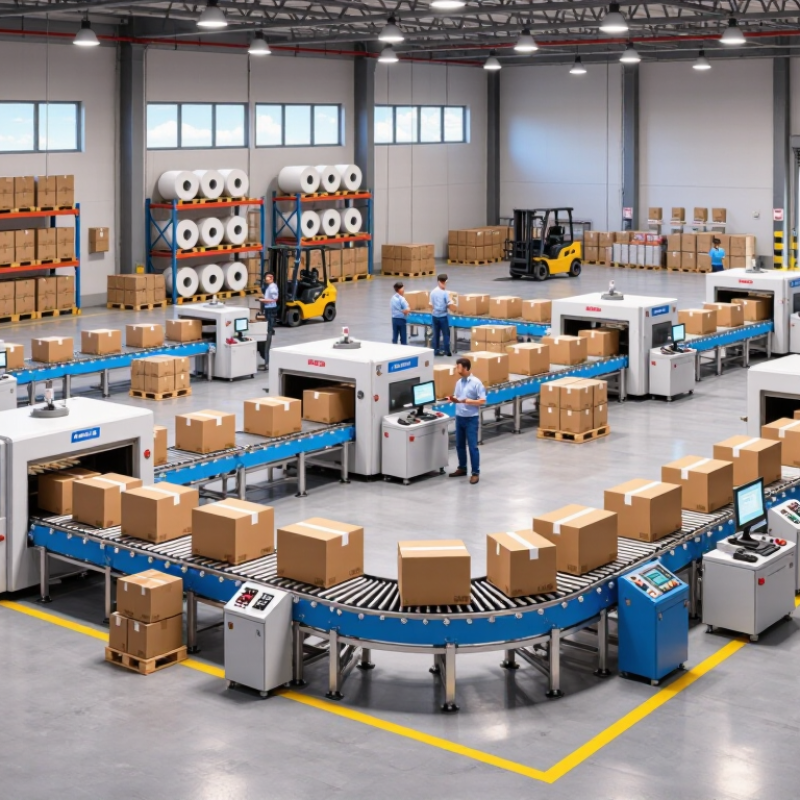
Production capacity is not simply a large monthly number. Reviewers should verify machine types, shift patterns, maintenance logs, and peak-season response. A plant may produce millions of boxes, yet struggle with short runs or complex Carton Box Design.
Reliable suppliers explain lead times using real order data. They also maintain traceability from paper roll to finished pallet. I would question any capacity claim without recent inspection evidence. Numbers can look impressive.
Sustainability deserves measurable proof. Look for recycled fiber content, responsible sourcing documents, water-based inks, waste recovery rates, and energy monitoring. Efficient die cutting can reduce trim waste beside the converting line.
Some factories reuse process water, while others only report intentions. That difference matters. Buyers should request current audit dates and corrective-action records. No system is perfect.
Even strong manufacturers may face inconsistent recycled paper quality or transport emissions. Transparent reporting is more credible than broad green language. Sustainability improvements should be judged yearly, not promised once.
Selecting a Chinese carton box manufacturer requires more than comparing quoted prices. In sourcing projects, I check board grades, flute profiles, print accuracy, and production controls. A reliable supplier should explain whether your box needs E, B, or BC flute. They should provide paper weight, compression data, and production sample photos. Ask for a physical prototype. Digital artwork can hide weak folds, loose glue, or inaccurate dimensions. Small details matter.
For Custom Carton Box Design, send a clear dieline, product dimensions, packed weight, and stacking conditions. Request a pre-production sample before approving bulk manufacturing. I inspect corner crush, crease alignment, color consistency, and performance after moisture exposure. A supplier with in-house testing equipment can document edge crush and box compression results. Still, certificates alone do not prove daily quality. Review recent inspection records and ask how rejected cartons are handled. Their answer often reveals more than a polished presentation.
Communication deserves equal attention. Confirm minimum order quantity, tooling charges, lead time, packaging methods, and transit-damage responsibility in writing. Use a video call to view the converting line and warehouse when possible. One factory may promise fast shipment, yet outsource printing and create delays. That risk is easy to miss. I would compare two pilot orders, not one. My own evaluations sometimes focused too heavily on price; later, inconsistent sizing increased packing labor. A manufacturer that reports problems early and corrects samples carefully is usually safer.
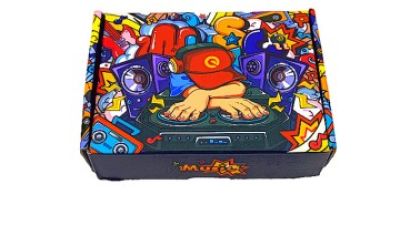
Custom corrugated gift shipping boxes from trusted China suppliers and factories provide a practical and attractive solution for businesses seeking premium logo packaging. Designed for both presentation and protection, these boxes can be tailored to different product sizes, shapes, and shipping requirements. Durable corrugated layers help guard contents against pressure and movement, while carefully selected materials support reliable handling throughout storage and delivery.
Vibrant color printing creates a polished exterior that showcases logos, product details, and custom artwork with clarity. Businesses can choose from various finishes, structural styles, and opening designs to create packaging that reflects their visual identity. A well-fitted lining adds another layer of protection, helping reduce scratches, shifting, and surface damage while giving the interior a refined appearance suitable for gifts, retail products, and promotional items.
Experienced factories in China use precise cutting, folding, printing, and quality-control processes to produce consistent packaging in small or large quantities. Custom dimensions and functional inserts can be developed for different product categories, allowing each box to balance strength, appearance, and shipping efficiency. These personalized corrugated solutions are suitable for companies serving customers in diverse markets and seeking dependable packaging with professional visual appeal.
Compare material quality, testing records, production capacity, delivery history, and communication. Price alone can mislead. Review the whole process.
Request incoming-material checks, moisture results, edge-crush data, and print-color inspections. Ask for batch records and corrective-action reports. Samples matter more than catalog images.
Samples reveal creasing, folding, die-cutting, and color consistency. Inspect a 500-box sample when possible. Small defects become expensive at scale.
Review machines, shift schedules, maintenance logs, monthly output, and peak-season planning. Ask about sudden order increases. Large numbers may hide weak short-run performance.
Confirm minimum order quantities, realistic lead times, packing methods, and transport costs. Request recent order examples. Promised speed is not proof.
Confirm board grade, paper weight, flute profile, and compression targets. Test boxes after stacking and humidity changes. Weak corners often reveal poor specifications.
Request recycled-fiber records, sourcing documents, ink details, waste-recovery rates, and energy data. Check current audit dates. Green claims need measurable evidence.
Not always. A cheap quote may exclude tooling, printing, packing, or transport. Simple cartons may suit a lower-cost supplier, while complex designs need stronger technical support. Rankings remain imperfect, so independent checks are wise.
China’s carton box packaging industry includes a wide range of manufacturers serving e-commerce, food, electronics, retail, industrial, and export markets. A leading Carton Box Packaging manufacturer is typically evaluated by its material quality, structural design expertise, printing and finishing capabilities, production efficiency, customization options, delivery reliability, and customer service. This overview explains the key criteria used to compare major suppliers, including product variety, engineering support, quality control systems, manufacturing capacity, and responsiveness to different order requirements.
It also examines how manufacturers address sustainability through recyclable materials, efficient production methods, responsible sourcing, and waste reduction. Buyers can use these comparisons to identify suppliers that match their required box style, dimensions, strength, appearance, budget, order volume, and certification expectations. By reviewing samples, testing performance, confirming production capabilities, and communicating specifications clearly, businesses can select a dependable Chinese carton box manufacturer for consistent quality and long-term cooperation.