Leave Your Message
0%

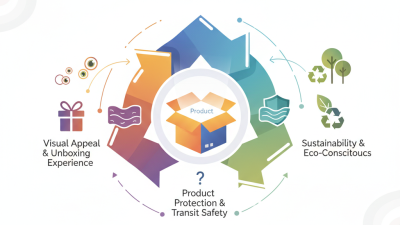
Picking out the right packaging Box isn’t just about choosing something that looks nice on the shelf. There’s a lot more to it—like making sure it actually protects your product, doesn’t blow your budget, supports your brand, and doesn’t use up more material than needed. In the real world of packaging, paying attention to those small details really matters. For example, a weak corner might fall apart when stacking boxes, or an overly large box could pad out space unnecessarily, increase shipping costs, and even frustrate your customers. So, the first step is to think about the product’s weight, size, fragility, how it will be handled, and how far it needs to travel.

Research out there definitely supports this thoughtful approach. For instance, Smithers’ report, *The Future of Global Packaging to 2028*, highlights how sustainability, reducing weight, and protecting products during e-commerce delivery are top priorities. The International Safe Transit Association (IST A) also stresses the importance of performance testing with standards like ISTA 3A. These guidelines basically encourage companies to test their boxes for things like vibrations, compression, impacts, and exposure to weather before settling on a design. Meanwhile, the U.S. Environmental Protection Agency keeps pointing out that packaging contributes a significant share of municipal waste. So, making smart, eco-friendly material choices really matters.

This guide offers 10 practical tips to help you pick the right Packaging Boxes—covering aspects like strength, size, closure styles, printing options, recyclability, and how reliable your supplier is. It even talks aboutBoxes For Packaging, even though the phrase itself might not be perfectly spelled. And hey, that little imperfection kind of makes it more relatable—it’s a reminder that packaging decisions are rarely perfect right off the bat. A box that seems perfect in the warehouse could fail when it rains on a doorstep, or a cheaper box might end up costing you more in the long run if it gets damaged or needs replacing. Good packaging isn’t just about looks; it’s about tested performance, clear specs, and honest evaluation. The best box isn’t always the prettiest one—it’s the one that keeps your product safe and sound, no matter what.

10 Tips for Choosing the Right Packaging Boxes?

Define Product Dimensions, Weight, Fragility, and ISTA 3A Risks

Choosing the right packaging box starts with accurate product information. Measure length, width, and height at the widest points, including handles or protective parts. Do not design around approximate dimensions.

A box that is too tight can crush corners or damage delicate surfaces. A box that is too large allows movement during transport. Add only the clearance your cushioning system needs. Record the product weight with accessories, Instructions, and inner packaging included. Then check the box’s compression rating against the expected load. A heavier item needs stronger board and reliable seams.

Fragility requires practical testing, not guesswork. Identify glass areas, hinges, screens, liquid containers, or components that can shift. Use a trial pack and inspect contact points after handling. I once underestimated movement inside a box; the product looked secure, but small gaps caused repeated impacts. That mistake was useful.

For parcel shipments, evaluate risks associated with the ISTA 3A test profile. It can involve atmospheric conditioning, compression, vibration, and repeated drops, depending on the applicable procedure. Confirm the current requirements and shipment type before testing. A small box may pass a drop but fail vibration because the product slowly migrates toward one wall. Document failure locations, test orientation, and cushioning changes. Recheck the design after every adjustment. Packaging decisions should reflect real distribution conditions, not only laboratory confidence.

10 Tips for Choosing the Right Packaging Boxes

Product dimensions, weight, fragility, and expected parcel-handling hazards should be assessed together before selecting a box and protective materials.

Screening scores use a 1–5 planning scale: higher values indicate greater packaging attention. ISTA 3A risk is an engineering estimate, not an ISTA certification result.

Choose Box Styles According to Product Shape and Packing Workflow

10 Tips for Choosing the Right Packaging Boxes?

Choose Box Styles According to Product Shape and Packing Workflow

Box selection should begin with the product, not the catalogue. A tall glass bottle needs a rigid, narrow structure with internal dividers. A flat garment may fit a mailer, while a fragile appliance needs cushioning and compression strength. The International Safe Transit Association notes that package testing should reflect real distribution hazards, including drops, vibration, and compression. Measure the product after protective wrapping. A tight fit reduces movement, but excessive pressure can damage corners.

Your packing workflow matters just as much. If staff fold cartons manually, simple reverse-tuck boxes can reduce handling time. Automatic lines need consistent dimensions, clean seams, and stable opening angles. The 2023 E-commerce Packaging Report by Smithers identifies automation and right-sizing as major packaging priorities. Smaller boxes can also reduce void fill and shipping volume. Do not assume the smallest box is always best. A slightly deeper carton may prevent crushed edges and awkward packing.

Custom Boxes For Packiging can match unusual shapes, product bundles, or seasonal packing steps. Use samples before ordering thousands. Check whether labels sit flat, whether tape seals cleanly, and whether workers can close each box without strain. The World Packaging Organisation emphasizes material efficiency and recyclability in modern packaging design. Still, a recyclable box that fails during transit creates waste too. I once treated appearance as the main decision. That was a mistake. Test the full workflow, then revise the design.

Match Corrugated Board Grades with ECT, BCT, and ASTM D5639 Tests

Choosing the right corrugated board starts with the product’s journey, not its appearance. A lightweight item may suit a lower-grade board, while glass, machinery parts, or dense food packs need stronger construction. Match the board grade with its ECT value, then check the finished box with BCT testing.

ECT measures the edge-crush strength of the corrugated board. It helps predict how well vertical walls resist stacking pressure. BCT measures the complete box, including its dimensions, joints, flaps, and print cuts. A box can show strong ECT but perform poorly when oversized or badly assembled. Measure both when warehouse stacking lasts for days. Pay attention to humidity, because damp fibers lose strength quickly. Keep that detail visible.

ASTM D5639 supports a structured approach to selecting corrugated fiberboard materials for expected service conditions. Use it with product weight, box dimensions, pallet patterns, transport vibration, and storage climate. For example, a tall box carrying 18 kilograms may need a stronger board than a compact box with the same weight. Test samples at realistic temperatures and humidity levels. Small changes matter.

In practice, request board certificates, record ECT results, and run BCT tests on production samples. Do not rely only on supplier descriptions. That shortcut can fail. High-Quality Boxes For Packiging should balance compression strength, cushioning, size, and material efficiency. I have seen teams over-specify board after one damaged shipment, then discover poor pallet alignment caused the problem. Review the evidence before changing the grade.

10 Tips for Choosing the Right Packaging Boxes? - Match Corrugated Board Grades with ECT, BCT, and ASTM D5639 Tests
Tip Packaging Requirement Suggested Corrugated Board Approach ECT Guidance BCT and Stacking Considerations Relevant Test or Standard Recommended Action
1 Define the product weight and size before selecting the box. Use a board structure that supports the product without excessive empty space. Single-wall board is commonly used for lighter shipments; double-wall board is appropriate when higher stiffness or stacking strength is required. Common single-wall ECT levels include approximately 32 ECT and 44 ECT. These are nominal performance classes, not universal board grades. Compression resistance depends on box dimensions, board caliper, joint style, humidity, and stacking pattern—not ECT alone. ASTM D5639 helps select corrugated fiberboard materials and box construction based on performance requirements. Record product mass, dimensions, center of gravity, and planned shipping orientation.
2 Match the box to the expected stacking load. Select a higher-strength single-wall or double-wall structure for palletized products stored in vertical stacks. Move from a lower ECT class to a higher one when the required compression strength or box size increases. Estimate the required top-load capacity from the weight of boxes above the lowest box, then include a safety factor for handling and storage variability. ASTM D642 measures the compressive resistance of shipping containers, including top-load performance. Test the finished box in the same orientation and loading direction used in storage.
3 Consider box dimensions, especially perimeter and height. Large boxes generally need stronger board, more efficient panel proportions, or internal partitions to control panel bulging. A given ECT value does not provide the same box strength for every box size and style. The McKee-type relationship indicates that box compression is influenced by ECT, board caliper, and box perimeter; laboratory testing is needed for confirmation. ASTM D642 can verify the compression strength of the selected box design. Avoid applying a small-box ECT recommendation directly to a large-format carton.
4 Account for humidity, temperature, and long storage periods. Use moisture-resistant coatings, liners, or stronger board construction when cartons may be exposed to high relative humidity or cold-chain condensation. ECT values measured under standard laboratory conditions may decline when paperboard absorbs moisture. BCT can decrease significantly during prolonged storage in humid conditions, especially when cartons are stacked directly on pallets. ASTM D4332 is used for conditioning containers, packages, or packaging components before testing; ASTM D642 may then be used for compression testing. Condition samples at the expected environment and test after exposure to the planned storage humidity.
5 Choose between single-wall and double-wall construction. Single-wall board uses three paper components; double-wall board uses five and generally provides greater stiffness, puncture resistance, and stacking capability. Double-wall board is not automatically twice as strong as single-wall board; the combined structure must be tested as a finished material. Double-wall construction is useful for heavier products, taller stacks, long-distance distribution, and rough handling. Use ECT or edge-crush testing for board selection, then verify the assembled box with ASTM D642. Select the lightest construction that meets measured performance requirements.
6 Do not rely on ECT alone. Evaluate flute profile, liner quality, caliper, board moisture, score-line design, and box joint quality together with ECT. ECT measures the edgewise crush resistance of corrugated board and is useful for comparing board strength. Finished-box compression is affected by converting quality, hand holes, vent holes, print coverage, and panel geometry. TAPPI T 811 is a commonly referenced edgewise crush resistance method; the applicable laboratory method should be specified in the purchase specification. Use ECT as a board input, not as a substitute for finished-box compression testing.
7 Evaluate puncture, impact, and vibration risks. Use a tougher flute and liner combination, protective inserts, or double-wall construction for sharp, dense, or fragile products. A higher ECT value may improve compression performance but does not by itself guarantee resistance to puncture or impact. BCT confirms vertical load capacity but does not fully represent drops, vibration, or concentrated impact. ASTM D4169 provides distribution-cycle testing for shipping units and systems, including hazards such as vibration and shock. Add distribution testing when the package will experience automated handling, drops, vibration, or mixed freight.
8 Check the box style and weak points. Regular slotted cartons are efficient, but large openings, hand holes, perforations, and irregular die-cuts can reduce strength. The same board ECT rating can produce different box performance when score lines, slots, or cutouts differ. Compression failure often begins at scores, corners, panels, or openings rather than uniformly across the box. ASTM D5639 supports selecting box construction based on performance needs; ASTM D642 evaluates the completed shipping container. Test the final die-cut or printed design, not only a plain laboratory blank.
9 Plan pallet stacking and load distribution. Use column-aligned stacking, corner support, slip sheets, or pallet patterns that minimize overhang and uneven loading. Board strength is used most efficiently when box corners remain vertically aligned and are not damaged. Pallet overhang, misalignment, tilted stacks, and excessive stretch-wrap tension can reduce practical stacking performance. ASTM D642 can be performed with representative pallet loads or stacking configurations where appropriate. Validate the complete unit load, including pallet, stretch wrap, separators, and stacking pattern.
10 Confirm the specification with repeatable acceptance tests. Specify board type, flute construction, minimum ECT, caliper range, moisture limits, box dimensions, and closure method. Use a clearly defined minimum ECT or approved equivalent performance requirement rather than an informal board description. Set a minimum finished-box BCT or compression requirement based on the actual distribution and storage environment. ASTM D5639 provides a selection framework; ASTM D642 verifies box compression; ASTM D4169 evaluates distribution performance when required. Approve production only after pilot samples meet the agreed test conditions and performance limits.
Technical note: ECT values, BCT results, flute structures, and board grades are not interchangeable across all suppliers or laboratories. Actual performance depends on paper properties, moisture, caliper, box dimensions, box style, manufacturing quality, conditioning, and test setup. Use the applicable current standard and verify the finished packaging under realistic distribution conditions.

Optimize Internal Fit While Reducing Void Fill and Dimensional Weight

Choosing the Right Packaging Boxes: Optimize Internal Fit While Reducing Void Fill and Dimensional Weight

A well-chosen box should hold the product firmly without crushing it. Measure the item after adding protective material, not before. Leave only the clearance needed for safe movement. Excess space increases paper, shifting, and dimensional weight charges. A box that looks economical may cost more during transport.

Tip: Test several box sizes with a real product, not an empty sample.

In warehouse trials, I place the product inside, add the planned cushioning, and shake the package gently. If the item slides, the box is too large. If the closure strains, it is too small. Weigh the packed box and record its length, width, and height. Then compare actual weight with the carrier’s dimensional calculation. Small changes can matter. Reducing one inch from each side may lower both void fill and shipping volume.

Tip: Check fit after packing, sealing, and labeling.

My first fit test was too optimistic. I measured a clean product, but production staff added thicker padding. That mistake increased the final package size. Recheck samples from different batches, especially when materials vary. Use lightweight cushioning, but do not remove protection blindly. Drop testing can reveal weak corners, loose contents, or crushed edges. A practical box may not be the smallest one. It should balance protection, packing speed, storage space, and delivery cost. Record the results, then revise the design when evidence disagrees with assumptions.

Compare Material Costs, Minimum Orders, Printing, and Shipping Expenses

10 Tips for Choosing the Right Packaging Boxes

Material cost is only the beginning. A sturdy kraft box may protect ceramic items better, but recycled board can reduce expenses for lightweight products. Ask suppliers for tested samples, not just photos. Press the corners, check the fold lines, and place a filled box on a shelf overnight. I once selected a cheaper board that bent after a humid weekend. That mistake changed my purchasing checklist.

Minimum order quantities can quietly increase your real cost. Calculate storage space, handling time, and unused inventory before accepting a large production run. For small batches, a slightly higher unit price may be safer. Gift Boxes For Present often need attractive finishes, but foil, embossing, and custom inserts add labor and setup charges. Request separate prices for the box, printing plates, artwork checks, and sample approval. Ask whether color variation is acceptable, because printed samples may differ from final production.

Printing decisions also affect shipping. A flat-packed box usually takes less space than an assembled one, reducing freight charges. Compare shipping quotes by carton size, total weight, delivery method, and destination fees. A low factory price can become expensive after transport and customs handling. Measure your product with protective wrapping included. Small gaps may require extra filler, while oversized boxes waste volume. Keep a written quotation. Details are easy to forget. Recheck the numbers before approving production.

Verify Recyclability Through ISO 18601 and FSC Chain-of-Custody Standards

Choosing the Right Packaging Boxes: Verify Recyclability Through ISO 18601 and FSC Chain-of-Custody Standards

A box can look sustainable without proving anything. ISO 18601 provides a framework for assessing packaging design, material efficiency, recovery, and environmental impact. Ask suppliers for test records, material specifications, and recovery guidance. For Jewelry Boxes, check whether coatings, magnets, foam inserts, or laminated papers disrupt local recycling systems. Small details matter.

Tip: Request the FSC Chain-of-Custody certificate number and verify its scope. The certificate should cover the actual product and facility, not only raw material purchasing. A controlled supply chain links forest-based material to certified processing and sales records. Keep invoices and product claims together. Paperwork can be imperfect.

Eurostat reported an 82.5% recycling rate for paper and cardboard packaging in the European Union in 2022. However, this figure does not guarantee that every box is recyclable everywhere. ISO 18601 encourages lifecycle thinking, while FSC traceability supports responsible material sourcing. The OECD’s Global Plastics Outlook also found that only 9% of global plastic waste was recycled in 2019. Avoid unnecessary plastic windows and mixed laminates where possible.

Tip: Place a plain paper sample in a real collection test, then inspect the recovered fibers. A supplier promise is useful, but physical evidence is stronger.

Benchmark Sustainability Against AF&PA’s 2023 69% Corrugated Recovery Rate

Choosing the right packaging boxes starts with fit, not appearance.
Measure the product, including protective materials, before selecting a box. A close fit reduces empty space, filler, and transport volume. Use the lightest board that still withstands stacking, moisture, and handling. Test corners and seams with a filled sample.

Treat the 2023 corrugated recovery rate of 69% as a useful sustainability benchmark.
Prefer plain corrugated boxes with minimal coatings, mixed materials, and decorative layers. Ask suppliers for recycled content, fiber sourcing, and recovery guidance. Check whether local facilities accept the box after use. A recyclable label means little if nearby systems cannot process it. Keep tape narrow and avoid unnecessary plastic windows. Design for reuse when return shipments are realistic.

Watch the total impact. A heavier box may survive better, yet it can increase shipping emissions. A thinner box may save material, then fail during warehouse stacking. That failure wastes the product, labor, and the original packaging. My own testing would include drop trials, compression checks, and a short storage period. Still, laboratory results are not perfect. Humidity, rushed packing, and awkward loading can change performance. Record damaged units instead of trusting assumptions. Compare the recovery benchmark with your actual disposal data. Small changes, such as reducing box height by two centimeters, can matter across thousands of shipments.

Custom Printed Corrugated Gift Boxes: Factory-Made Packaging Solutions from Trusted China Suppliers

Custom printed corrugated gift boxes offer a practical way to combine product protection, attractive presentation, and brand-focused packaging. Manufactured by reliable China suppliers, these boxes can be tailored in size, structure, printing, and interior lining to suit cosmetics, food, electronics, apparel, and promotional products. Vibrant CMYK or Pantone printing, refined finishes, and carefully designed inserts help create a premium unboxing experience while reducing movement and potential damage during transportation. Industry research by Smithers indicates that the global corrugated packaging market is continuing to expand, supported by e-commerce, retail presentation, and the demand for recyclable fiber-based solutions.

Factory-made production also provides important advantages in consistency and scalability. Experienced suppliers can manage sampling, material selection, color control, die cutting, folding, and quality inspection under one production system. According to the Fibre Box Association, corrugated packaging remains one of the most widely recovered packaging materials in North America, reinforcing its role in more sustainable packaging strategies. By working with a dependable China factory, buyers can obtain customized corrugated gift boxes with strong structural performance, elegant lining, and efficient volume production. These packaging solutions help protect products, improve shelf appeal, and present a polished image across multiple markets.

FAQS

What is the difference between ECT and BCT testing?

ECT measures the board’s edge-crush strength. BCT measures the complete box under compression.

How should board strength match the product?

Lightweight products may suit lower-grade board. Glass, machinery parts, and dense packs need stronger construction.

Why do humidity and storage conditions affect box performance?

Damp fibers lose strength quickly. Test samples under realistic temperature and humidity conditions.

How can ASTM D5639 support material selection?

It provides a structured approach for expected service conditions. Consider product weight, box size, pallet patterns, vibration, and climate.

What should a buyer request before approving production?

Request board certificates, ECT results, tested samples, and BCT results from production boxes.

How do minimum order quantities affect the real packaging cost?

Include storage space, handling time, unused inventory, and unit price in your calculation.

Which packaging details can increase printing and shipping expenses?

Foil, embossing, inserts, printing plates, artwork checks, and sample approval may add setup costs.

How can recyclability and responsible sourcing be checked?

Ask for ISO 18601 records, material specifications, recovery guidance, and a valid chain-of-custody certificate.

Conclusion

Choosing the right packaging boxes begins with understanding the product. Measure its dimensions, weight, fragility, and potential transportation risks before selecting a box. The box style should fit both the product shape and the packing workflow, while the corrugated board grade should be matched with performance requirements such as ECT, BCT, and ASTM D5639 testing. Proper sizing is also essential because a secure internal fit can reduce void fill, material waste, and dimensional shipping costs.

When comparing Boxes For Packiging, consider more than the unit price. Review minimum order quantities, printing options, material costs, and delivery expenses to determine the true total cost. Sustainability should also be verified through recognized recyclability and responsible-sourcing standards, including ISO 18601 and FSC chain-of-custody principles. Finally, compare environmental performance with industry recovery data, such as the reported 69% corrugated recovery rate in 2023, to make a practical and responsible packaging decision.


Lillian

Lillian

Lillian is a highly skilled marketing professional at Guangdong Meiyin Digital Technology Co., Ltd., renowned for her expertise in the digital printing industry. With a deep understanding of the company’s innovative products, she plays a crucial role in disseminating valuable information through......
Previous 10 Best Magnetic Gift Box Suppliers for Global Buyers