Leave Your Message
0%

Brown paper bags? They're still a pretty practical packaging pick for retailers, restaurants, bakeries, and e-commerce brands that want a natural look. But honestly, looks alone don't tell you much. If you're sourcing globally, you really need to check the details: paper weight, recycled content, handle strength, print quality, and how consistent the production is from batch to batch.

So, this guide—called “10 Best Brown Paper Bags Suppliers for Global Buyers”—is all about suppliers that actually show they can manufacture reliably and communicate clearly. We look at things like kraft paper quality, bag sizes, minimum order quantities, sample support, customization options, export experience, and how well the packaging holds up during shipping. And honestly? Buyers should ask for up-to-date test reports too, and double-check any claims themselves. Because a brown bag can look tough as nails on a product page, but put a heavy glass jar in it and… well, it might not hold up.

William McDonough—one of the big names in circular design—has said it plenty of times: “Waste equals food.” The idea is pretty simple: buyers should see packaging as part of a bigger material system, not just something you toss. Recyclable paper definitely matters, but so do responsible sourcing, efficient production, and practical reuse. And honestly, the small details make a difference. A reinforced handle? That helps. Getting the dimensions right? Less waste. Clear specs? They keep costly misunderstandings from happening.

Look, this shortlist is handy. But let's be real, it's not perfect. Supplier rankings? They can shift depending on capacity, pricing, shipping conditions, even regional demand. Some manufacturers are great at keeping in touch, but not so great at actually producing. Others? Amazing quality, but don't expect much in the way of customization. So if you're buying globally, it's smart to compare samples, check certifications, and talk through delivery expectations before you commit to big orders. At the end of the day, you still have to use your own judgment.
10 Best Brown Paper Bags Suppliers for Global Buyers

What to Consider When Choosing a Brown Paper Bag Supplier

Choosing among the “10 Best Brown Paper Bags Suppliers for Global Buyers” requires more than a low quotation. Start with fiber traceability, recycled content, and documented food-contact compliance. The FAO’s Global Forest Resources Assessment 2020 counted about 4.06 billion hectares of forest worldwide. That figure alone does not prove responsible sourcing. Ask for chain-of-custody records, pulp origin, test reports, and current audit dates. For Custom Brown Paper Bags, request physical samples before approving artwork. Pinch the handle. Rub the fold. Check whether the base opens cleanly under realistic weight.

Capacity and consistency matter. A supplier should state monthly output, machine limits, minimum order quantity, and lead time. CEPI’s 2023 Monitoring Report recorded an 82.5% paper recycling rate in Europe for 2022. Yet recyclability depends on coatings, laminates, adhesives, and local collection systems. Ask whether water-based inks are used and whether the finished bag remains accepted in target markets. A glossy sample can hide weak seams. Request burst, tear, handle-pull, moisture, and dimensional tests. Independent lab results are more useful than vague “eco-friendly” claims.

Price comparisons should include tooling, printing plates, inspection, freight, and currency exposure. A cheap unit price may become expensive after rework or port delays. I would also check corrective-action records, not just certificates. A supplier can pass an audit and still miss a delivery. That is the uncomfortable part. Keep a pilot order, written tolerances, and a backup production route before scaling.

10 Best Brown Paper Bag Suppliers for Global Buyers

What to Consider When Choosing a Brown Paper Bag Supplier

Recommended evaluation weights for comparing brown paper bag suppliers. The model focuses on measurable purchasing factors rather than company or brand performance.

Compliance and certifications should be checked first, followed by paper quality, order flexibility, landed cost, production capacity, lead time, customization, sustainability documentation, and logistics support. Buyers can adjust these weights according to product requirements and destination-market regulations.

How Brown Paper Bag Suppliers Are Classified by Product Range

Brown paper bag suppliers are best classified by product range, not by factory size alone. The first group focuses on retail carry bags. These suppliers offer flat-handle, twisted-handle, and die-cut styles. They usually provide kraft paper between 60 and 120 gsm. Custom printing, reinforced bases, and moisture-resistant coatings are common options.

The second group supplies food-service packaging. Their range includes bakery bags, takeaway sacks, grease-resistant pouches, and window bags. Some products use paper from certified forest sources. Others combine paper with thin barrier layers for oils or sauces. Grand View Research estimates that the global paper bags market will expand steadily through 2030, supported by food delivery and retail replacement demand. Product safety, sealing strength, and contact compliance matter more here than appearance.

A third group serves industrial and specialty buyers. Its catalog may include multiwall sacks, cement bags, agricultural packaging, and heavy-duty shipping bags. These suppliers often test burst strength, drop resistance, and moisture performance. Smithers’ packaging studies show that recyclable fiber formats are gaining attention, but performance gaps remain in humid logistics conditions. That warning matters. High-Quality Brown Paper Bags are not defined by paper color alone. A thick bag can still fail at the handle. A beautiful print cannot repair weak folds. This classification is practical, but imperfect; some suppliers cross several product ranges and require closer technical review.

Key Materials and Manufacturing Standards for Paper Bags

Global buyers should examine paper structure before comparing quotations. Kraft paper commonly uses virgin fiber, recycled fiber, or a controlled blend. Virgin kraft usually offers higher tear resistance. Recycled content can reduce resource demand, but quality varies by fiber length and cleaning. According to CEPI’s 2023 statistics, Europe’s paper recycling rate reached 82.5%. That figure is useful, but it does not guarantee strong bag performance.

A capable Brown Paper Bags Factory should state basis weight, moisture, bursting strength, and handle pull resistance. For grocery bags, 70–120 g/m² paper is common, although size and load change the specification. This range is not a promise. Smithers’ report, The Future of Paper and Board Packaging to 2029, identifies sustainability and delivery efficiency as major packaging drivers. Buyers should request samples after humidity conditioning, not only dry samples. A bag stored near a loading dock may soften overnight. I have seen attractive prototypes split at the glued side seam.

Manufacturing control matters as much as material selection. ISO 9001-based inspection can support batch consistency, while ISO 14001 helps structure environmental management. For food-contact use, suppliers should provide migration documentation for inks, adhesives, and paper. EN 13432 may support industrial compostability claims, but only when the complete bag meets the standard. CEPI’s data also shows that collection systems differ by market. Recycled paper claims therefore need traceable percentages and test evidence. A printed certificate alone is insufficient. Sometimes, the overlooked detail is handle attachment. That detail can decide whether a full bag reaches the customer intact.

10 Best Brown Paper Bags Suppliers for Global Buyers - Key Materials and Manufacturing Standards for Paper Bags
The supplier names are intentionally anonymized. The table presents practical supplier benchmark profiles and buyer-verification criteria based on commonly used paper-bag materials, manufacturing practices, and international packaging standards.
Supplier Profile Typical Production Region Primary Bag Applications Recommended Paper Material Common Paper Basis Weight Handle and Construction Options Printing Capability Important Manufacturing Standards Environmental Documentation to Request Buyer Quality-Control Priorities
Supplier Profile 01 East Asia Retail, fashion, promotional, and gift packaging Recycled or virgin kraft paper; brown unbleached kraft is suitable for a natural appearance 80–170 g/m² Twisted paper handles, flat paper handles, reinforced folded top, glued or sewn handle attachment Flexographic or offset printing; 1–6 colors depending on equipment and bag construction ISO 9001 quality-management system; ISO 18601 packaging and environment framework may be applicable FSC chain-of-custody certificate where certified fiber is claimed; recycled-content evidence where applicable Handle pull strength, bottom squareness, paper moisture, print registration, and carton packing consistency
Supplier Profile 02 South Asia Grocery, bakery, takeaway, and general retail bags Machine-glazed kraft or standard kraft paper; grease-resistant grades for selected food uses 45–110 g/m² Flat-bottom construction, block bottom, SOS-style format, or pinch-bottom format Flexographic printing is commonly used for simple logos, text, and repeat patterns Food-contact compliance must be confirmed for the intended market and food type; ISO 9001 is commonly requested Food-contact declaration, migration test documentation, fiber-origin declaration, and ink compliance statement Bag opening performance, seam adhesion, bottom leakage, odor, ink rub resistance, and load-bearing capacity
Supplier Profile 03 Europe Premium retail, cosmetics, apparel, and luxury gift packaging High-quality virgin kraft or recycled kraft with smooth, printable surface 100–200 g/m² Rope handles, cotton or paper cord handles, eyelets, reinforced patches, and folded rim Offset or flexographic printing; specialty finishes may include water-based varnish or embossing ISO 9001; EN 13430 may be relevant for recyclable packaging claims; applicable national packaging rules must be checked FSC or PEFC documentation where claimed; recyclability assessment; water-based coating declaration Color consistency, surface smoothness, crease accuracy, handle alignment, and appearance after transport
Supplier Profile 04 Southeast Asia Foodservice, cafés, restaurants, and delivery packaging Food-grade kraft paper; grease-resistant paper or certified dispersion coating for suitable applications 50–120 g/m² Flat handle, twisted paper handle, self-opening square bag, and reinforced base options Water-based flexographic inks are commonly preferred for foodservice packaging Food-contact requirements depend on destination legislation; applicable local GMP and hygiene controls should be verified Food-contact declaration, overall and specific migration test results where required, and coating specification Grease resistance, wet-strength behavior, odor transfer, thermal exposure, seam integrity, and safe food-contact use
Supplier Profile 05 North America Supermarket, pharmacy, restaurant, and institutional packaging Recycled kraft paper or virgin kraft paper selected according to required strength and food-contact use 50–140 g/m² Handleless grocery bag, flat-handle bag, twisted-handle bag, and reinforced bottom structures Flexographic printing for high-volume orders; digital printing may suit short runs ASTM D6400 applies to certain compostable plastic products and should not be assumed for ordinary paper bags; recycling claims require substantiation Recycled-content verification, fiber certification where claimed, and compostability evidence only when the complete product qualifies Basis weight, burst strength, tensile strength, bottom construction, pallet stability, and regulatory Labeling
Supplier Profile 06 Latin America Produce, grocery, bakery, and local retail packaging Brown kraft paper with recycled fiber content or virgin fiber for higher strength 45–120 g/m² Pinch-bottom, flat-bottom, block-bottom, and handleless formats One- to four-color flexographic printing is suitable for many standard applications ISO 9001 or equivalent documented quality procedures; destination-country packaging regulations must be reviewed Recycled-fiber percentage, fiber-source statement, ink specification, and paper-mill documentation Dimensional tolerances, paper caliper, seam bonding, bottom opening, moisture resistance, and delivery accuracy
Supplier Profile 07 Middle East and North Africa Bakery, takeaway, hospitality, retail, and event packaging Virgin or recycled kraft paper; heavier grades are preferred for premium and high-load bags 60–180 g/m² Twisted paper handles, rope handles, flat handles, reinforced rims, and laminated reinforcement patches Flexographic, offset, or digital printing depending on order volume and artwork complexity ISO 9001; food-contact compliance and local import requirements should be confirmed for food packaging FSC or PEFC evidence where applicable, coating and adhesive declarations, and food-contact documentation Heat and humidity conditioning, handle adhesion, print scuffing, warehouse storage performance, and odor control
Supplier Profile 08 Eastern Europe Industrial parts, e-commerce, retail, and multi-wall paper packaging High-strength kraft paper, often using multiple plies for demanding loads 70–200 g/m² per paper layer Multi-wall construction, stitched or pasted seams, block bottom, valve bag, and reinforced lifting points Flexographic printing for technical information, product identification, and simple branding ISO 9001; ISO 21898 may be relevant to certain flexible intermediate bulk container components, not ordinary shopping bags Fiber-origin records, recycled-content evidence, adhesive specification, and recyclability assessment Paper ply strength, seam peel resistance, drop testing, compression strength, moisture exposure, and filling-line compatibility
Supplier Profile 09 Oceania Retail, takeaway, produce, hospitality, and environmentally focused packaging Recycled kraft or responsibly sourced virgin kraft with uncoated, recyclable construction where possible 50–150 g/m² Flat handles, twisted handles, handleless formats, and wide gussets for improved stability Water-based flexographic printing is commonly suitable for recyclable paper packaging AS/NZS packaging and waste requirements may apply in the destination market; claims must match local regulations FSC or PEFC evidence, recycled-content calculation, recyclability statement, and coating declaration Recycling compatibility, water resistance without problematic plastic laminates, handle strength, and accurate environmental claims
Supplier Profile 10 Global Export-Oriented Profile Mixed retail, foodservice, promotional, and private-label packaging programs Material selection based on load, food-contact need, print quality, recycled content, and destination regulations 45–200 g/m² Custom dimensions, gussets, flat or twisted handles, reinforced bases, and multi-size product ranges Flexographic, offset, rotogravure, or digital printing selected according to volume and artwork requirements ISO 9001 is a useful quality benchmark; ISO 14001 may support environmental-management evaluation; product claims require separate evidence FSC or PEFC certificate where claimed, recycled-content proof, food-contact documentation, test reports, and product carbon data if advertised Pre-production approval, sample testing, AQL inspection plan, carton and pallet standards, traceability, and corrective-action process

Evaluating Customization, Printing, and Packaging Capabilities

10 Best Brown Paper Bags Suppliers for Global Buyers

Choosing among the ten best brown paper bag suppliers requires more than comparing prices. Customization shows a supplier’s real production discipline. Ask for paper grammage, bag dimensions, handle strength, and acceptable color variation. A reliable supplier should provide a physical sample before bulk production. Digital proofs alone can hide weak folds or blurred edges.

Printing quality deserves close inspection. Request test sheets showing ink coverage, barcode readability, and logo alignment. Flexographic printing suits larger runs, while digital printing supports shorter runs and variable designs. According to Grand View Research, the global paper bags market was valued at approximately USD 5.3 billion in 2022, with continued growth expected through 2030. Rising demand increases options, but not necessarily consistency. Some suppliers quote excellent prices and then compromise on paper stiffness.

Packaging capability also affects delivery performance. Suppliers should explain carton strength, moisture protection, pallet loading, and container utilization. The International Trade Centre emphasizes accurate packaging information in cross-border trade because poor packing can increase damage and handling costs. Ask for carton dimensions and net weights. Small details matter.

A supplier may claim customization expertise. Test that claim. Send a difficult artwork file, a tight delivery window, or a request for two paper finishes. Observe the response. I would not trust a perfect presentation alone. Real production includes occasional color shifts, delayed approvals, and rejected samples. A transparent supplier records these problems and corrects them before shipment.

Comparing Supplier Capacity, Pricing, and Minimum Order Quantities

For global buyers, supplier capacity should be checked beyond a polished catalog. Ask for monthly output, paper-making equipment, and recent production records. A supplier producing 500,000 bags monthly may handle seasonal demand better than a cheaper workshop. Request samples from normal production, not specially prepared pieces. Check handle strength, folded seams, paper weight, and print alignment. Small defects become expensive when containers arrive.

Pricing deserves a full breakdown. Compare the bag price, printing plates, packaging, inspection, and inland delivery separately. A low unit quote can hide setup charges or costly carton requirements. For example, a 12-cent bag may become 15 cents after printing and export packing. Confirm whether the price uses recycled or virgin paper. Paper grade changes durability, appearance, and cost. Currency movements can also affect long-term contracts. Fixed pricing sounds safer, but it may limit flexibility.

Minimum order quantities often reveal a supplier’s real operating model. Some factories accept 5,000 bags for plain designs but require 30,000 for custom printing. Ask whether mixed sizes or colors can share one order. This can reduce overstock for smaller distributors. However, low MOQs may carry higher prices or slower production. I have found that buyers sometimes focus too heavily on the smallest order. That is a mistake. Delivery consistency matters more. Still, supplier claims should be verified through references, production photos, and a written specification sheet. Guesswork remains risky.

How to Select the Right Brown Paper Bag Supplier for Global Trade

Selecting the right Brown Paper Bags Supplier requires more than comparing price lists. A capable supplier should understand bag strength, paper weight, handle design, printing limits, and shipment conditions. Request samples made with the same paper grade and dimensions as your planned order. Then test them with realistic loads, such as folded clothing or boxed food containers.

Inspect the seams, handle attachment, base folding, and surface finish. A polished sample can hide weak production control. Ask for batch records, quality procedures, factory capacity, and material traceability. Confirm whether recycled content claims are supported by reliable documentation. Do not rely on photos alone.

Global trade adds practical risks. Discuss minimum order quantities, production lead times, packing methods, and port delivery terms before signing. The supplier should explain how moisture is controlled during storage and ocean transport. Ask how damaged cartons, color variation, or late shipments are handled. My earlier assumption that the lowest quote meant the best value was wrong. Price alone misleads.

Evaluate communication as carefully as product quality. Can the supplier answer technical questions clearly? Can it provide consistent measurements across samples and bulk orders? Request a written specification sheet, inspection plan, and approved sample reference. Keep room for independent inspection. Even experienced buyers can overlook small details, especially handle comfort and carton protection. Test both before committing.

Customized Foldable Paper Packaging Boxes with Clear Windows: Features, Benefits, and China Supplier Guide

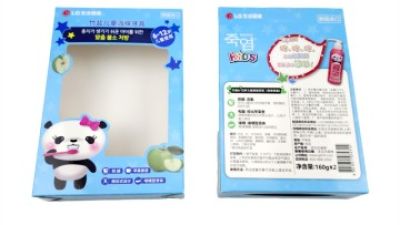
Customized foldable paper packaging boxes with clear windows combine efficient logistics, attractive presentation, and practical retail performance. According to Grand View Research’s *Folding Cartons Market Report*, the global folding-carton market was valued at approximately US$136.7 billion in 2023 and is projected to grow at about 5.7% annually through 2030. This growth reflects increasing demand for lightweight, printable, and shelf-ready packaging. A clear window allows customers to view the product directly, while customized dimensions, colors, finishes, and structural designs help create a more distinctive unboxing experience.

Manufactured by an experienced China supplier, the customized folding box with window is designed for convenient storage, efficient shipping, and quick assembly. Its flat-folding structure can reduce warehouse volume and support streamlined fulfillment, while rigid paperboard construction offers dependable protection for products such as gifts, cosmetics, food items, and household goods. The supplier can also provide options including recyclable paperboard, matte or gloss lamination, embossing, foil accents, and custom inserts. Smithers’ *Future of Sustainable Packaging to 2028* identifies recyclability, material efficiency, and fiber-based solutions as major packaging-development priorities, making paper folding boxes a practical choice for businesses seeking attractive presentation with reduced material complexity.

When evaluating a China packaging factory, buyers should review paperboard specifications, window-film compatibility, printing quality, sample approval procedures, production capacity, and export packaging. Clear communication of box dimensions, loading requirements, artwork files, and quality standards helps ensure consistent results from prototype to mass production.

FAQS

How can brown paper bag suppliers be classified?

Classify them by product range, not factory size alone. Main groups include retail, food-service, and industrial packaging suppliers.

What products do retail bag suppliers usually offer?

They commonly provide flat-handle, twisted-handle, and die-cut bags. Paper weights often range from 60 to 120 gsm. Printing and reinforced bases may be available.

What should buyers check for food-service paper bags?

Check grease resistance, sealing strength, moisture performance, and food-contact compliance. Bakery bags and takeaway sacks may need different barrier layers.

Are thicker paper bags always stronger?

No. A thick bag can still fail at the handle or folded seam. Paper weight matters, but construction matters too.

What do industrial packaging suppliers usually provide?

Their products may include multiwall sacks, agricultural bags, and heavy-duty shipping bags. They often test burst strength, drop resistance, and moisture performance.

How should buyers evaluate supplier production capacity?

Request monthly output, equipment details, and recent production records. Ask for samples from normal production. Special samples can hide ordinary defects.

Which costs should be included in a price comparison?

Separate bag prices, printing plates, inspection, packaging, and inland delivery. A low quote may exclude setup or export-packing charges.

How do minimum order quantities affect purchasing decisions?

Plain bags may require smaller orders than custom-printed bags. Mixed sizes or colors can sometimes reduce excess inventory. Lower quantities may cost more.

What quality checks should buyers perform before ordering?

Check handle strength, paper weight, seam folds, print alignment, and carton condition. Small defects become expensive in large shipments. Still, verify every claim.

Can one supplier serve several product categories?

Yes, some suppliers cover retail, food-service, and industrial ranges. This classification is useful but imperfect. A written specification and references remain necessary.

Conclusion

Choosing the right Brown Paper Bags supplier requires a careful review of product range, material quality, manufacturing standards, and production reliability. Suppliers may specialize in shopping bags, food packaging bags, gift bags, or industrial paper sacks, so buyers should match the supplier’s expertise with their intended use. Important factors include paper strength, recyclable or responsibly sourced materials, handle construction, safety requirements, and consistent quality control. Clear documentation and stable production processes are especially important for international purchasing.

Buyers should also evaluate customization options, printing methods, packaging solutions, production capacity, pricing, lead times, and minimum order quantities. A capable supplier should provide practical design support, accurate samples, flexible order arrangements, and secure export packaging. Comparing several suppliers through quotations, product samples, factory information, and communication responsiveness can help identify the best balance between cost and quality. By considering these elements systematically, global buyers can select a dependable partner that supports reliable supply, professional presentation, and long-term business growth.

Gabriel

Gabriel

Gabriel is a dedicated marketing professional at Guangdong Meiyin Digital Technology Co., Ltd., where he has established himself as an expert in the company's innovative product line. With a profound understanding of digital printing solutions, Gabriel plays a vital role in promoting high-quality,......
Previous China Top 10 Carton Box Packaging Manufacturers?